The Verdict
At 8:36 PM on Thursday, December 18, 2025, a federal jury in Milwaukee delivered its verdict. Guilty on Count One. Not guilty on Count Two. Milwaukee County Circuit Court Judge Hannah Dugan, 66 years old, became a convicted felon.
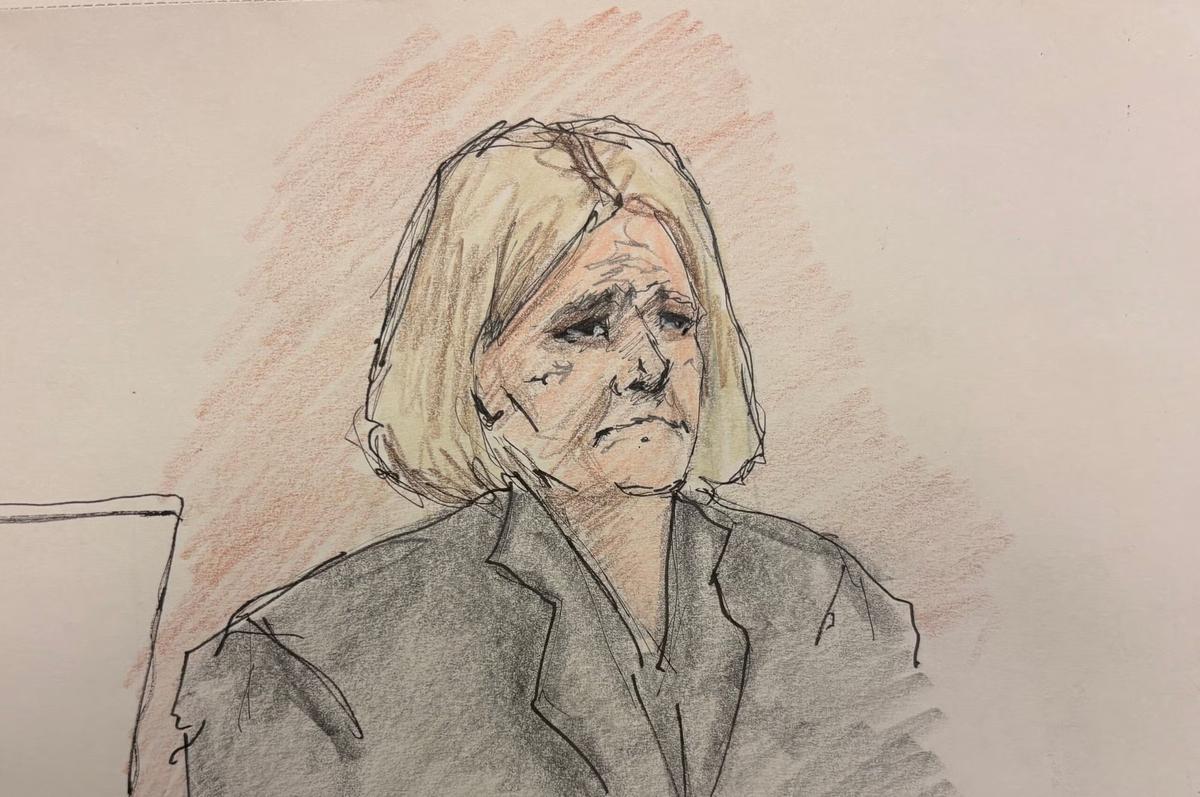
The jury had deliberated for six hours. They found her guilty of obstructing an official proceeding, a felony carrying up to five years in federal prison and a $250,000 fine. They found her not guilty of concealing a person to prevent his arrest, a misdemeanor. A split verdict. Neither side got everything they wanted.
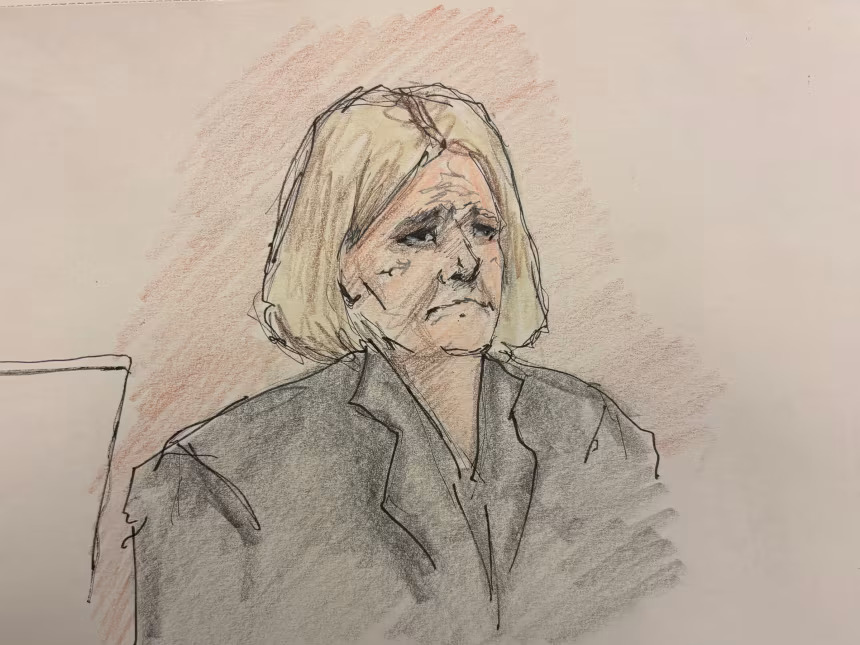
Dugan sat motionless as the verdict was read. Courtroom sketch artist Adela Tesnow, a 23-year-old recent graduate of the Milwaukee Institute of Art and Design working her first major trial, captured the moment from her seat to the left of the judge's bench. She watched Dugan's face shift as each count was announced. First came a flicker of relief when the not guilty verdict landed on Count Two. Then her expression changed. Her shoulders tensed. The guilty verdict on Count One had landed.
Dugan and her attorneys immediately retreated to a side conference room. They closed the door. They didn't speak to the reporters waiting outside. Her lead attorney, Steve Biskupic, emerged later to express disappointment and confusion. How could the jury find obstruction but not concealment? The charges shared overlapping elements. If she didn't conceal Eduardo Flores-Ruiz from the agents, what exactly did she obstruct?
Outside the federal courthouse, a crowd had gathered to support Dugan. Therese Heeg, 66, told the Wisconsin Examiner she felt a responsibility to attend the rally to "protect our democracy for my children, my grandchildren." She said she worries about immigration enforcement coming to take people away. "Every single day there's more and more atrocities happening right here," she said. "We are trapping people in camps. I used to wonder what it was like to live under the Nazis, and now I know. I'm living it."
Strong words. Maybe too strong for some. But that's where we are in December 2025. A sitting judge is convicted of federal crimes for asking questions about a warrant and directing agents to her supervisor. Her supporters invoke fascism. Her prosecutors invoke the rule of law. And somewhere in between, there's a woman whose career is over and whose freedom hangs in the balance.
I watched my father get prosecuted by the federal government for protecting attorney-client privilege. I watched him get prosecuted by the state of West Virginia for teaching people their constitutional rights from a coffee shop. When I saw the verdict come down on Hannah Dugan, I felt something familiar. The system doesn't like it when people ask questions. It really doesn't like it when judges ask questions.
So let me ask some questions.
Who Is Hannah Dugan?
Before she was a defendant, before she was a symbol in the immigration wars, before her name became a rallying cry for both sides, Hannah Dugan was a judge who showed up to work every day in Milwaukee County's misdemeanor division. Battery cases. Disorderly conduct. Traffic violations. The unglamorous work of keeping the system moving.
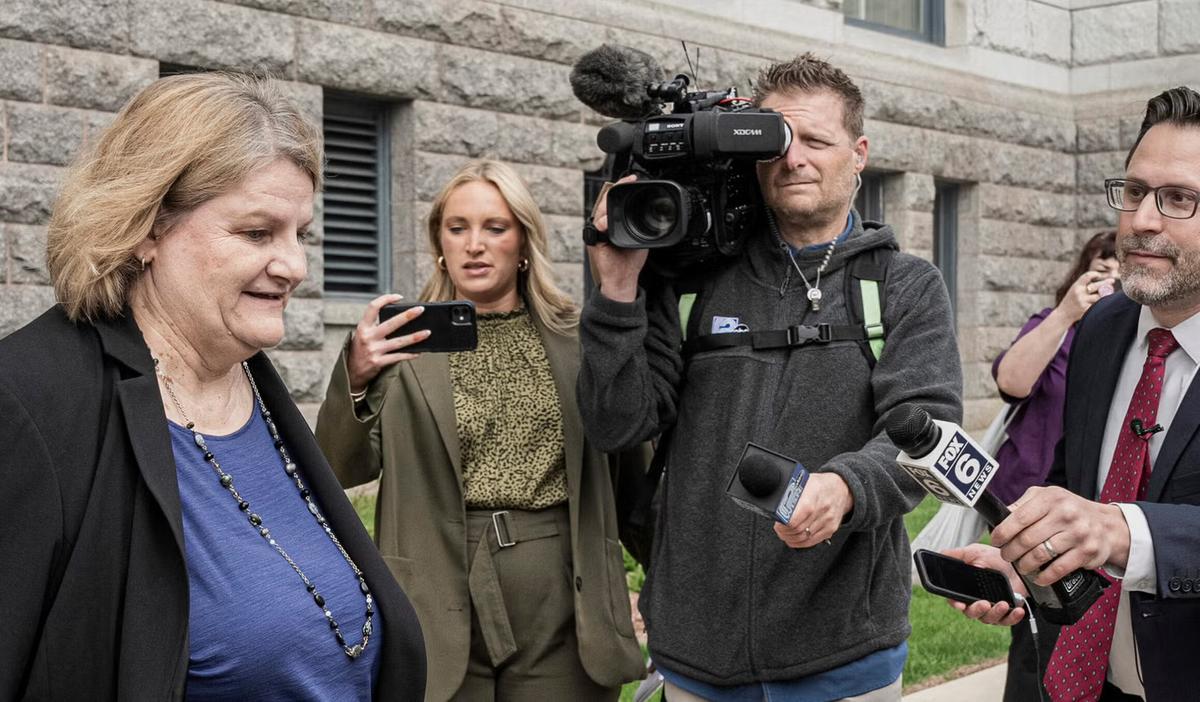
Born in 1959, Dugan built her career helping people who couldn't afford lawyers. She worked with legal aid organizations for years, representing clients who had nowhere else to turn. She served as executive director of Catholic Charities of Southeastern Wisconsin from 2006 to 2009, running programs that served the poor and vulnerable. She refereed attorney discipline cases for the Wisconsin Office of Lawyer Regulation, deciding whether other lawyers had violated their ethical obligations. She was president of the Milwaukee Bar Association, leading the professional organization that represents attorneys across the county.
Her colleagues described her as meticulous. Careful. Thorough. The kind of judge who read every filing and asked probing questions from the bench. She chaired the Wisconsin Judicial Commission, which oversees discipline of judges statewide. She served as vice-chair of the Milwaukee County Ethics Board. She wrote articles about local and state legal history for bar publications.
In 2016, she ran for circuit court judge and beat the incumbent, Paul Rifelj, with 65% of the vote. A decisive victory. She got re-elected in 2022 without opposition. For nearly a decade, she presided over misdemeanor cases in what lawyers call "the trenches" of the justice system. Not the high-profile murder trials. Not the complex civil litigation. The everyday cases that make up the bulk of what courts actually do.
- Age: 66 years old
- Position: Milwaukee County Circuit Court Judge (2016-present, suspended April 2025)
- Education: Law degree, career in legal aid
- Previous roles: Milwaukee Bar Association President, Catholic Charities Executive Director, Wisconsin Judicial Commission Chair
- Conviction: Felony obstruction of official proceeding
- Maximum sentence: 5 years in prison, $250,000 fine
Speaking to the Milwaukee Independent in 2016 during her first judicial campaign, Dugan described herself as someone who believed in "the rule of law" and the independence of the judiciary. She spoke about the challenges facing Milwaukee's courts: underfunding, overcrowded dockets, the difficulty of providing meaningful hearings when judges are processing dozens of cases per day. She talked about the importance of treating every defendant fairly, regardless of the charges.
She also spoke about her Catholic faith. Faith that led her to work with Catholic Charities. Faith that informed her view of the law as a tool for protecting the vulnerable. At her legal defense fund website, her attorneys describe her as "driven by her belief in a fair justice system and her Catholic faith."
The Department of Homeland Security has a different description. They called her an "activist judge" who helped a criminal evade arrest. FBI Director Kash Patel posted her booking photo to social media. Attorney General Pam Bondi went on television to denounce her. "You cannot obstruct a criminal case," Bondi said. "And really, shame on her."
Both descriptions might be partially true. Neither tells the whole story. The truth is messier than either side wants to admit. Hannah Dugan spent 40 years in the legal profession building a reputation for careful, ethical practice. Then, in 47 minutes on a Friday morning, all of that got reduced to a single question: Did she help a man escape, or did she follow courthouse protocol?
April 18: The 47 Minutes That Changed Everything
The morning of April 18, 2025, started like any other Friday at the Milwaukee County Courthouse. Judge Dugan had a full docket of misdemeanor cases. One of them involved Eduardo Flores-Ruiz, a 31-year-old Mexican national facing battery charges.
What Dugan didn't know as she put on her robe and prepared for court was that six federal agents were already in the building. They had positioned themselves in the sixth-floor hallway outside her courtroom, ready to arrest Flores-Ruiz the moment he stepped out. They were wearing plainclothes. No uniforms. No visible badges. Just suits and stern expressions, waiting.
The Context: ICE Comes to Milwaukee
To understand what happened on April 18, you need to understand what had been happening in the weeks before. The Trump administration had taken office in January 2025 with immigration enforcement as a top priority. Stephen Miller, the architect of the administration's immigration policy, reportedly pushed ICE to increase arrests to 3,000 per day. Agents fanned out across the country. They showed up at workplaces, at homes, at churches. And they showed up at courthouses.
From 2019 until January 21, 2025, a federal policy existed instructing ICE to refrain from making routine arrests at courthouses. The rationale was simple: courthouses need to be accessible to everyone, including immigrants. If people fear arrest when they show up for their hearings, they stop showing up. Cases can't proceed. Victims don't testify. The whole system breaks down.
On February 21, 2025, the Department of Homeland Security issued new interim guidance rescinding those limitations. Courthouses were now fair game.
In early April, ICE made its first arrests at the Milwaukee County Courthouse. Two people were taken into custody within days of each other. One was arrested in an elevator. Another was grabbed moments before a family court hearing. Judges didn't know what was happening. There was no official policy, no guidance from courthouse administration, no protocol for how to handle federal agents showing up in the hallways.
Emails obtained during Dugan's trial showed judges reaching out to each other in confusion. "Does this mean that Milwaukee County is cooperating with ICE?" one judge asked. Milwaukee County does not honor ICE detainer requests in its jail, a policy that put it at odds with the new administration. Now agents were showing up at the courthouse itself.
Milwaukee County Executive David Crowley objected publicly to what he called intimidation tactics. "We have an obligation to administer our courts in a safe, efficient manner that delivers due process for anyone," he said in a statement.
That was the atmosphere when April 18 arrived. Confusion. Concern. Judges emailing each other asking what to do. And six federal agents waiting in the hallway outside Hannah Dugan's courtroom.
The Man They Came For
Eduardo Flores-Ruiz had lived in Milwaukee for 12 years. He worked in restaurants and food trucks, the kind of jobs that don't ask too many questions. He grew up catching frogs with his father in Michoacan, Mexico. In 2013, he was deported. At some point after that, he came back. Illegal reentry. A federal crime, but one that usually results in a brief detention and another deportation, not years in prison.
In early 2025, Flores-Ruiz was arrested on battery charges. A state court misdemeanor. The details of the battery case aren't entirely clear from public records, but it was the kind of case that typically ends with probation or time served. Not the kind of case that makes headlines. Not the kind of case that usually attracts federal attention.
But by April, ICE had identified him as a target. They knew he'd been deported before. They knew he was in the country illegally. They knew he was scheduled to appear in Judge Dugan's courtroom for a routine hearing on his battery case. They decided to take him there.
Total elapsed time from Dugan entering the hallway to Flores-Ruiz's arrest: approximately 20 minutes. The 47 minutes in my headline refers to the full sequence from when agents first arrived at the courthouse until the situation settled and normal court business resumed.
The arrest succeeded. Flores-Ruiz was in custody. The agents got their man. If that had been the end of it, this would be a footnote in the immigration enforcement debates of 2025.
But it wasn't the end. It was just the beginning.
The Arrest of Judge Dugan
One week later, on April 25, 2025, FBI agents arrived at the Milwaukee County Courthouse. This time they weren't there for an immigrant defendant. They were there for a judge.
They arrested Hannah Dugan. They handcuffed her. They walked her through the federal courthouse corridors in restraints. According to her defense fund website, she was made to "shuffle through the federal courthouse corridors in handcuffs and ankle shackles."
FBI Director Kash Patel posted a photograph of Dugan in handcuffs to his social media account. The caption read: "No one is above the law." The post was eventually deleted. Then it was restored. The message had been delivered to every judge in America.
Dugan was charged with two counts: obstruction of an official proceeding, a felony, and concealing an individual to prevent arrest, a misdemeanor. She was released on her own recognizance that same day after a brief appearance before a federal magistrate. The Wisconsin Supreme Court suspended her from the bench pending resolution of her case.
The case that would test the boundaries of judicial independence had begun.
The Trial
Judge Hannah Dugan's federal trial began on Monday, December 15, 2025, in the federal courthouse in Milwaukee, before Judge Lynn Adelman. No cameras were allowed inside. The only visual record came from courtroom sketch artist Adela Tesnow, a 23-year-old recent art school graduate who sat in the same seat every day, positioned to the left of the judge and adjacent to the witness stand, capturing the moments no photographer could preserve.
Tesnow told reporters she understood the weight of her role. "There are no cameras allowed in federal court," she said, "so I am the only 'photographer' in there that can capture the moment, and it is such an honor. It is a privilege to do it."
The Government's Case
Federal prosecutors built their case on three pillars: surveillance video from the courthouse hallway, audio recordings from Dugan's courtroom, and testimony from the agents who were there that day.
The hallway video showed Dugan in her black robes stepping into the corridor. It showed her confronting the agents, gesturing toward the chief judge's office. It showed her returning to her courtroom while the agents walked away. The prosecution argued this was a deliberate strategy: send the agents on a wild goose chase while Flores-Ruiz escaped through the back.
The courtroom audio was more damaging. Even though Dugan handled Flores-Ruiz's case "off the record," microphones in the courtroom captured her words. Prosecutors played the recording for the jury. Dugan's voice, telling her court reporter: "I'll do it. I'll get the heat." The words hung in the courtroom like a confession.
Assistant U.S. Attorney Kelly Brown Watzka told jurors in her closing argument that Dugan had conducted a "round-up" of federal agents, sending them to the chief judge's office while she created an "escape route" for Flores-Ruiz through a door defendants don't normally use. "You don't have to agree with immigration enforcement policy to see this was wrong," Watzka said. "You just have to agree the law applies equally to everyone."
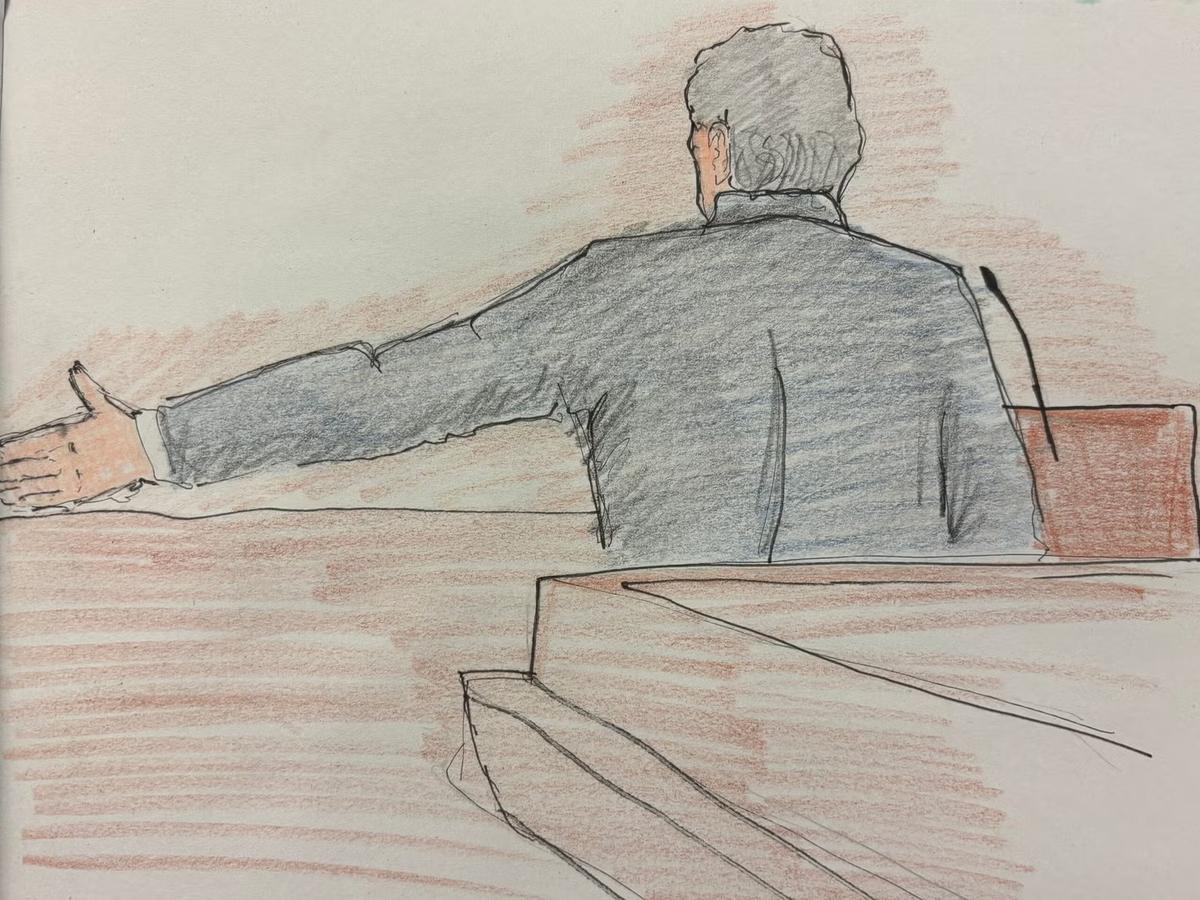
But the prosecution's most powerful weapon wasn't video or audio. It was Judge Kristela Cervera. The colleague who had stood beside Dugan in the hallway that morning. The colleague who had led the agents toward the chief judge's office. She took the stand for the government.
Cervera testified that "judges shouldn't be helping defendants evade arrest." Prosecutors highlighted the quote in their closing presentation to the jury. A fellow judge. A colleague. Someone who was there. Saying Dugan crossed a line.
The Defense
Defense attorney Jason Luczak opened by acknowledging the obvious: the government had resources, surveillance footage, and the backing of the entire Justice Department. "This is a very important case; this is a very unprecedented trial," he told the jury. "Make no mistake, the government is trying to make an example" out of Dugan.
Luczak painted a picture of chaos and confusion. ICE had started making arrests at the Milwaukee County Courthouse just weeks earlier. Two people had been arrested in early April, one in an elevator, another moments before a family court hearing. Judges didn't know what was happening. There was no official policy. No guidance from courthouse administration. No protocol for how to handle federal agents who showed up unannounced in the hallways.
The defense called Milwaukee County Circuit Court Judges Katie Kegel and Laura Gramling-Perez, who testified about the confusion among the judiciary. They described emails judges sent each other asking for guidance and sharing stories about having people "snatched" out of their courtrooms. One judge wrote that she'd seen ICE agents sitting in cars outside the courthouse, watching. Nobody knew what they were supposed to do.
"They're not even following their own policies," Luczak told the jury about ICE. Arrests that should have been reported up the chain of command weren't. Agents were supposed to notify courthouse officials before making arrests, but they didn't. "This caused concerns, legitimate concerns, among the judges."
Luczak argued Dugan was trying to follow what she understood to be courthouse protocol: report any immigration agents to supervisors. That's exactly what she did. She directed the agents to Chief Judge Carl Ashley. How is following protocol obstruction?
The defense's character witness was former Milwaukee Mayor Tom Barrett, who testified he'd known Hannah Dugan for over 50 years, since they were in high school together. He couldn't speak to what happened on April 18. He wasn't there. But he could speak to who Hannah Dugan was as a person: careful, ethical, dedicated to the law.
Notably absent from the witness list: Hannah Dugan herself. She never took the stand. She invoked her Fifth Amendment right not to testify against herself. Judge Adelman instructed the jury that they could not consider her silence as evidence of guilt. But her voice was still in the courtroom, captured on that audio recording. "I'll do it. I'll get the heat."
The Split Verdict
The jury deliberated for six hours. When they returned to the courtroom on Thursday evening, they had reached what lawyers call a "split verdict." Guilty on Count One, obstruction of an official proceeding. Not guilty on Count Two, concealing an individual to prevent arrest.
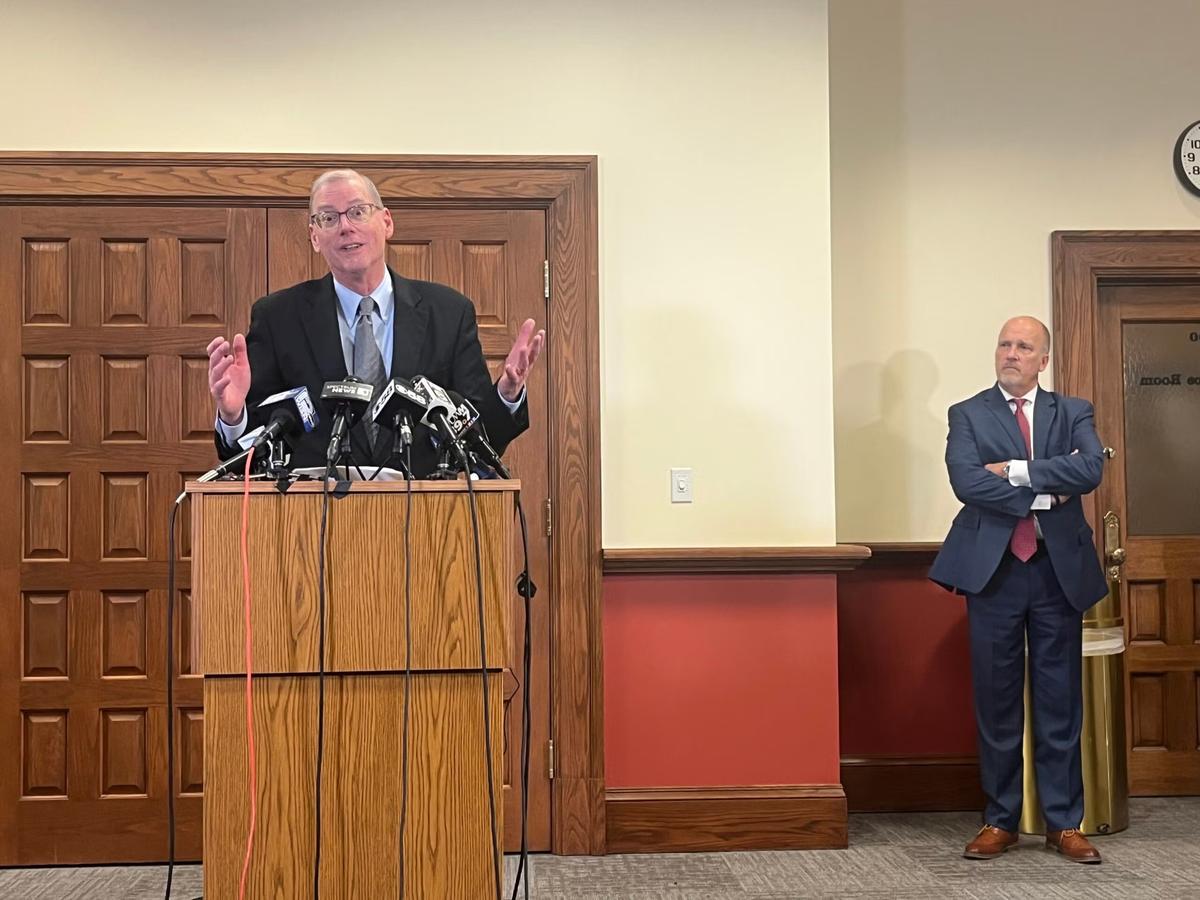
Defense attorney Steve Biskupic, who handled the post-verdict press availability, called the result puzzling. Both charges shared many of the same legal elements. How could a jury find that Dugan obstructed agents but didn't conceal Flores-Ruiz from arrest? If she didn't conceal him, what exactly did she obstruct? "I don't understand how the jury could have reached a split verdict," Biskupic told reporters, "since the elements of both charges were virtually the same."
One juror, speaking anonymously to reporters after the verdict, said the panel followed Judge Adelman's instructions faithfully. Asked whether it had been difficult to reach a decision, the juror answered directly. But that's all they would say.
Interim U.S. Attorney Brad Schimel addressed reporters after the verdict. He tried to lower the temperature. "Some have sought to make this about a larger political battle," he said. "While this case is serious for all involved, it is ultimately about a single day, a single bad day, in a public courthouse. The defendant is certainly not evil. Nor is she a martyr for some greater cause."
Schimel denied the prosecution was political. He said courthouse arrests are safer because people are screened for weapons. He urged everyone to accept the verdict peacefully. "We weren't trying to make an example out of anyone," he said. "This was necessary to hold Judge Dugan accountable."
The Constitutional Question
Strip away the immigration politics for a moment. Strip away the surveillance video, the audio recordings, and the competing narratives about what happened on April 18. Strip away the question of whether Dugan's actions were noble or misguided. What you're left with is a fundamental question about power in the American system.
Who controls the courthouse?
For decades, courthouses were considered sensitive locations where federal immigration enforcement generally didn't occur. The reasoning was practical, not ideological. Courts need to be accessible to everyone. Witnesses need to show up to testify. Victims need to feel safe reporting crimes. Defendants need to appear for their hearings. If immigrants believe they'll be arrested when they walk into a courthouse, they stop coming. Cases collapse. Justice goes unserved.
Under previous administrations, ICE operated under guidelines limiting enforcement actions in or near courthouses. Those guidelines weren't absolute. Agents could still make arrests in emergencies or when dealing with dangerous criminals. But routine immigration enforcement in courthouses was discouraged.
The Trump administration rescinded those guidelines shortly after taking office in January 2025. Stephen Miller, the president's senior advisor and architect of immigration policy, reportedly pushed ICE to dramatically increase arrests, aiming for 3,000 per day. Courthouses became fair game. Agents in plainclothes began showing up at immigration courts, state courts, even federal buildings. They arrested people in hallways, in elevators, in parking lots, moments after their hearings concluded.
More than 150 former state and federal judges signed a letter before Dugan's trial began, calling her arrest an attempt to intimidate the judiciary. Retired Massachusetts Supreme Court Justice Geraldine Hines said the prosecution was "an effort to intimidate judges" into compliance with the administration's immigration agenda.
The New York City Bar Association condemned Dugan's arrest as "a calculated show of force designed to intimidate state court judges and chill their exercise of independent judgment." They warned that prosecuting judges for courtroom decisions threatens the foundation of an independent judiciary.
Let me be careful here. I'm not saying judges are above the law. If Hannah Dugan broke the law, she should face consequences. That's what the rule of law means. It applies to everyone, including the people who administer it. My father went to federal prison for refusing to violate attorney-client privilege. He didn't get a pass because he was a lawyer. Judges shouldn't get a pass because they're judges.
But this prosecution raises questions that go beyond one judge and one defendant in one courthouse on one Friday morning.
Dugan's defense team tried to get the case dismissed before trial on constitutional grounds. They argued judicial immunity should protect her actions. Judges have long enjoyed immunity from lawsuits over their judicial decisions. You can't sue a judge because you didn't like their ruling. The defense argued the same principle should apply to criminal prosecution.
They cited the Supreme Court's recent ruling in Trump v. United States, which held that presidents enjoy immunity for official acts. If presidents are immune, the defense argued, why shouldn't judges be immune for their official acts on the bench?
They also argued the prosecution violated the Tenth Amendment, which reserves powers not granted to the federal government to the states. State courts are state institutions. The federal government prosecuting a state judge for how she ran her state courtroom, they argued, exceeded federal authority.
Judge Adelman denied all their motions. The case went to trial. The jury convicted. But those constitutional questions aren't going away. The defense has announced plans to appeal. Higher courts will get their shot at these issues.
Here's what troubles me about this case, and it's the same thing that troubled me watching my father get prosecuted twice for standing on constitutional principles.
The system works through discretion. Prosecutors choose which cases to bring. They have limited resources. They can't prosecute everyone who might have technically violated a law. So they choose. And when they choose to prosecute a sitting state judge for directing federal agents to her supervisor and showing a defendant out a side door, that choice sends a message.
The FBI chose to arrest Dugan at her workplace, in front of her colleagues, in the building where she had served for nearly a decade. They chose to handcuff her. They chose to photograph her in restraints. They chose to have the FBI director post that photograph to social media with the caption "No one is above the law." That wasn't just an arrest. That was a message.
Attorney General Pam Bondi said judges opposing immigration policies would face prosecution. "If you are harboring a fugitive," she said on television, "we don't care who you are. We will come after you and we will prosecute you."
That's not the language of blind justice. That's not the language of prosecutors carefully weighing the evidence and making neutral decisions about which cases merit prosecution. That's the language of an executive branch sending a message to the judicial branch: Get out of our way. Don't ask questions about our warrants. Don't direct our agents to your supervisors. Don't exercise your judgment in ways that inconvenience us. Or we will destroy your career.
Whether you agree with Dugan's actions or not, whether you think she was protecting courthouse order or helping a criminal escape, the precedent being set here should concern everyone who cares about the independence of the judiciary.
Today it's a judge who directed ICE agents to her supervisor. Tomorrow it might be a judge who grants too many motions to suppress evidence. Or a judge who excludes testimony the government wanted admitted. Or a judge who rules the wrong way on a habeas petition challenging immigration detention.
Once the executive branch establishes that it can prosecute judges for exercising their discretion in ways the executive doesn't like, the independence of the judiciary isn't gone overnight. It erodes. Slowly. Case by case. Judge by judge. Each one a little more hesitant to rule against the government. Each one a little more aware that their career could end with handcuffs and a perp walk if they ask the wrong questions.
That's how you lose judicial independence. Not in a dramatic confrontation. In a thousand small surrenders, each one seemingly reasonable, until one day you look around and realize the courts belong to whoever controls the prosecutors.
What Happens Now
Judge Hannah Dugan faces up to five years in federal prison and a $250,000 fine when she's sentenced. No sentencing date has been set as of this writing. Legal experts have weighed in on what to expect. University of Wisconsin-Madison Law Professor John Gross told reporters that actual prison time would be "virtually unheard of" for this type of offense, given the nature of the allegations and Dugan's completely clean record before this case.
But prison might be the least of her worries. The more immediate consequence is the end of her career.
The Wisconsin Constitution bars convicted felons from holding public office. There are no exceptions for judges. There are no exceptions for first-time offenders. There are no exceptions for people who were trying to follow protocol. Dugan was suspended from the bench by the Wisconsin Supreme Court shortly after her arrest in April 2025. That suspension, which was supposed to be temporary pending resolution of her case, is now likely permanent. Her career as a judge, built over nearly a decade of service, is over.
The Wisconsin Judicial Commission, which oversees discipline of judges in the state, has not yet announced what formal proceedings it will pursue. But the felony conviction makes the outcome inevitable. Hannah Dugan will not return to the bench she was elected to in 2016.
The defense has announced plans to appeal. Defense attorney Steve Biskupic said the split verdict makes no sense and provides grounds for challenging the conviction. Beyond that, the constitutional issues that Judge Adelman declined to address before trial remain unresolved. Judicial immunity. The Tenth Amendment. The separation of powers. These questions will get their day in appellate court.
Norm Eisen of the Democracy Defenders Fund, who has been following the case, said it is "far from over" and that "substantial legal and constitutional issues remain unresolved." A coalition of 13 advocacy groups, including Common Cause Wisconsin and the League of Women Voters Wisconsin, issued a statement saying "higher courts must carefully review the serious constitutional questions this case raises about due process, judicial authority, and federal overreach."
What Happened to Eduardo Flores-Ruiz
Meanwhile, the man at the center of this entire case is back in Mexico. Eduardo Flores-Ruiz was deported on November 13, 2025, after spending approximately seven months in federal custody. He pleaded guilty to illegal reentry, a federal crime. He pleaded no contest to one count of misdemeanor battery in state court. He received time served on both charges.
At his sentencing hearing, speaking through a translator, Flores-Ruiz apologized for entering the United States illegally. He promised never to return. He was removed to Mexico the same day.
Think about that for a moment. His original case was a misdemeanor battery charge in Milwaukee County. The kind of case that typically resolves with probation, maybe a few months of jail time. Time served. Move on with your life. Instead, it became a federal case, a months-long detention, and a deportation. And along the way, it ended the career of a circuit court judge with nearly a decade on the bench.
Flores-Ruiz worked in restaurants and food trucks for 12 years in Milwaukee. He grew up catching frogs with his father in Michoacan. He was 31 years old when federal agents chased him down six floors of the Milwaukee County Courthouse and tackled him on the sidewalk outside.
That's who this was all about. One man. One misdemeanor. One judge who asked federal agents if they had a judicial warrant, directed them to her supervisor, and showed a defendant out a side door.
The Mission
I've been watching trials for years now. Watching judges, watching prosecutors, watching defense attorneys do their jobs. Sometimes the system works the way it's supposed to. Sometimes it doesn't. Sometimes people get justice. Sometimes they get something else entirely. My job is to watch and ask questions and make sure you're watching too.
The Hannah Dugan case matters because it's about more than one judge in one courthouse in one city. It's about whether the judicial branch has the independence to exercise judgment without fear of prosecution by the executive branch. It's about whether asking questions about warrants and following protocols makes you a criminal. It's about who gets to decide what happens inside a courtroom: the judge who was elected to run it, or the federal agents who show up unannounced in the hallway.
My father, Steven M. Askin, was prosecuted twice for standing on constitutional principles. The first time, he went to federal prison for refusing to violate attorney-client privilege. The second time, he was convicted of unauthorized practice of law for teaching people their constitutional rights from a coffee shop in Martinsburg, West Virginia.
The prosecutor in his second case, the state case, opposed his application to have his law license reinstated. She said she feared he would "disrupt the legal system" by training young lawyers to insist on constitutional protections, demand due process, protect the presumption of innocence. What she really feared was that people would learn they had rights and start demanding them.
Hannah Dugan asked federal agents if they had a judicial warrant. She directed them to her supervisor. For that, she's now a convicted felon. Her career is over. Her freedom hangs in the balance. And every judge in America got the message.
The system only works if we force it to work. If we watch. If we question. If we refuse to let them operate in darkness. If we insist that the protections in the Constitution aren't just words on parchment but actual limits on government power that apply to everyone, including the people who enforce the laws.
This isn't over. The appeal will come. Higher courts will weigh in on the constitutional questions. The separation of powers will get its day in court.
Until then, we watch. We question. We refuse to look away.
That's the mission. That's always been the mission. And it will be the mission as long as the system needs watching.